
Home › About
Built by people who've been on both sides of these exams.
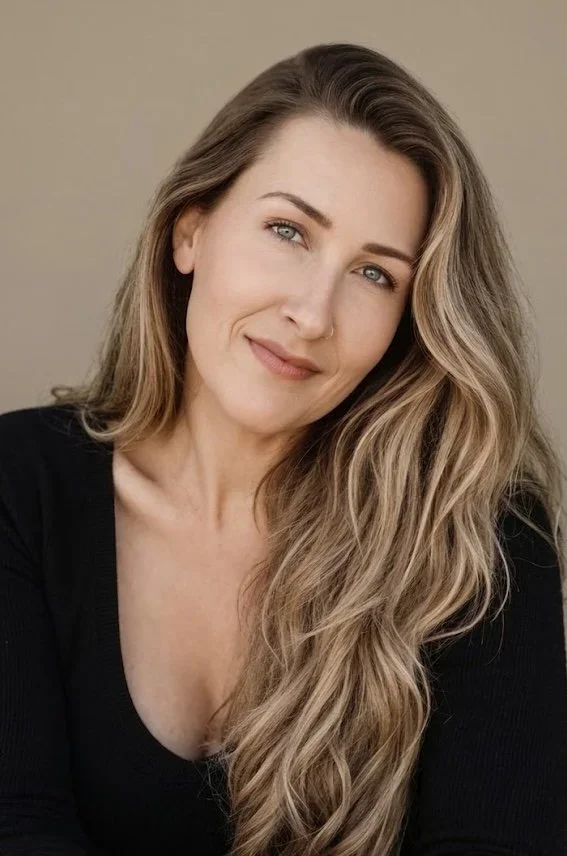
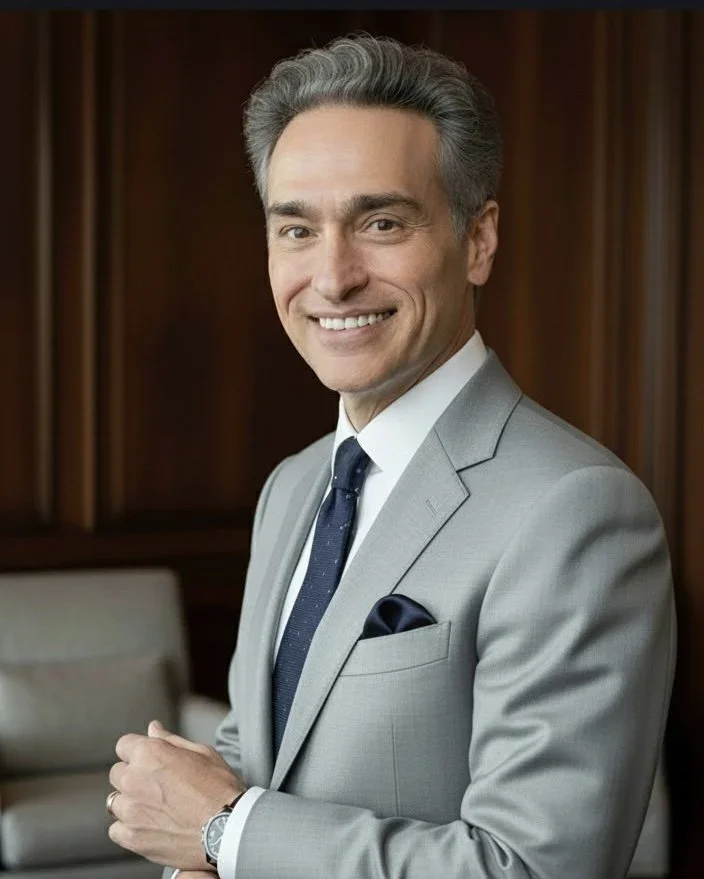
Amanda Staniec spent nearly a decade controlling live en route traffic at Oakland Center and served as the ZOA Training Representative — the person responsible for taking Academy graduates and getting them certified on real traffic. Ronnie Williams spent 32 years inside the FAA across ZID, ZJX, ZOA, and Honolulu, working en route and terminal operations and training the new controllers who arrived at those facilities straight from the Academy. Between them, they've been on the receiving end of hundreds of Academy graduates. They know what the training produces — and exactly where it falls short.
~10 yrs
Major FAA facilities between them — ZID, ZJX, ZOA, Honolulu
32 yrs
Ronnie's FAA career — en route and terminal, four major facilities
40+
Combined years training and evaluating controllers on live traffic
4
Major FAA facilities between them — ZID, ZJX, ZOA, Honolulu
WHY THIS COURSE EXISTS
The course we wish existed when we were in the pipeline.
Air traffic control has one of the most unusual hiring pipelines in the federal government. You don't need aviation experience. You don't need a degree. You need to pass a cognitive test (the ATSA) that most people have never seen, then survive a 3-month Academy course with a pass-or-go-home final, then spend 3–5 years completing facility certification on live traffic before you're a Certified Professional Controller.
Most people who want this career don't fail because they're unqualified. They fail because they were unprepared — for the ATSA format they'd never practiced, or for the Basics course at an Academy that moves fast and doesn't slow down for anyone. Amanda passed the ATSA coming in off the street with no aviation background. Ronnie spent three decades training the controllers who came to him fresh from the Academy, and he has seen — consistently — where the gaps show up when the coursework meets real traffic.
"The difference between a 'Qualified' and a 'Well Qualified' ATSA score is mostly preparation. The ATSA is a format problem. Practice the format."
Amanda Staniec
ATC Prep Course is the preparation they'd recommend to their own students. Not a generic test-prep service. Not a 50-hour video series. Specific preparation for the two exams that filter out most of the people who want this career.
Amanda Staniec
Former FAA Air Traffic Control Specialist, Oakland Center (ZOA) · FAA Training Representative · ATSA Prep Course author
Oakland Center (ZOA)
~10 Years ATC
En Route Certified
Oakland Center (ZOA)
Off-the-Street Hire
Amanda came into air traffic control the same way most of the people reading this would — off the street, no aviation background, no pilot's license, no prior connection to the FAA. She applied during an open USAJobs posting, passed the ATSA, completed the FAA Academy Basics course in Oklahoma City, and was placed at Oakland Center (ZOA), one of the busiest and most complex en route facilities in the country.
Oakland Center manages traffic across one of the most demanding airspaces in the US — northern California, much of Nevada, and high-altitude overflights across the Pacific corridor. ZOA is a Level 12 facility, which means it handles dense, complex, high-altitude traffic continuously across a massive geographic area. Becoming certified there — learning every sector, every coordination procedure, every weather pattern — takes years.
Amanda spent close to a decade at ZOA. The latter part of her career included time as an FAA training representative, which meant she was on the certification side — evaluating new controllers working live traffic, observing their decision-making, signing off on their certifications, and failing them when they weren't ready. She's seen the gap between candidates who were genuinely prepared and those who weren't from the inside of that evaluation process.
Why she built the ATSA course
When Amanda took the ATSA, she had no prep material. The format was unfamiliar — the Air Traffic Scenarios section especially, which puts candidates in a simplified radar simulation they've never seen before. She passed on preparation instinct and prior experience. Most applicants don't have that baseline, and they walk into the ATSA cold against a format they've never practiced.
The ATSA isn't a knowledge test you can cram for. It's a cognitive format test. The candidates who score Well Qualified aren't necessarily smarter than the ones who score Qualified — they've practiced the right skills in the right format. The ATSA Practice Test is built around exactly that gap: format practice, timed simulation, section-level feedback, and enough repetition to push someone from Qualified to Well Qualified.
Amanda's career timeline
Years 1–2 Applied off the street → passed ATSA → FAA Academy Basics → placed at Oakland Center (ZOA). Initial sector training under supervision.
Years 1–2 Progressive certification across ZOA sectors. Advancing from entry-level positions to high-altitude en route coverage. Handling Pacific overflights, Bay Area arrivals, and complex sector coordination.
Years 1–2 Certified across multiple sectors. Began transition into training work — mentoring candidates working live traffic under observation.
Years 1–2 FAA Training Representative. Evaluating, certifying, and failing candidates working live traffic at ZOA. Building the prep framework that became ATC Prep Course.
Amanda's course
The ATSA Practice Test covers all 5 sections with full timed simulation. Section-level scoring shows you exactly where to focus.
If you're preparing for the ATSA — or just want to know where you stand — this is the direct path.
Free mini-test
Not sure where you stand? Take the free 10-question ATSA mini-test. No account, no credit card.
Oakland Center (ZOA)
ZOA is an ARTCC (Air Route Traffic Control Center) — a Level 12 en route facility managing high-altitude traffic across northern California, Nevada, and Pacific overflights. Certification at a Level 12 facility is among the most demanding in the FAA system.
Ronnie Williams
Former FAA En Route Controller & Field Instructor · 32 Years FAA · ZID / ZJX / ZOA / Honolulu · Basics Prep Course author
32 Years FAA Service
En Route & Terminal
Field Instructor (Post-Academy)
En Route Examiner
ZID · ZJX · ZOA · Honolulu
Ronnie Williams spent 32 years inside the FAA — working en route and terminal operations at some of the busiest facilities in the country: ZID in Indianapolis, ZJX in Jacksonville, ZOA in Oakland, and Honolulu. He certified as a controller, advanced into en route examining and field instruction roles, and spent years training the new controllers who arrived at those facilities straight from the Academy in Oklahoma City.
Those new controllers — fresh from the Basics course, newly assigned to their first real facility — are who Ronnie spent a significant part of his career working with. He knows what the Academy's training produces when it works well. He also knows where it leaves gaps. Three decades of receiving Academy graduates gives you a particular kind of pattern recognition: which topics show up weak, which skills take longest to build on live traffic, and what preparation habits separate controllers who certify quickly from the ones who struggle. The Basics Prep Course is built around that knowledge — not from inside the Academy, but from the facilities that received its graduates.
The Basics final is computer-graded, 70% threshold, in a compressed 3-month curriculum that moves fast. Students who arrive having already internalized the material — the concepts, the terminology, the logic of how the airspace system works — perform better from day one and are easier to bring up to speed on the facility-specific material that follows. That's the preparation gap Ronnie built a course to close.
What Ronnie's experience actually show
The FAA Academy Basics covers 30 chapters: radar systems, airspace, weather, separation standards, phraseology, emergency procedures, the national airspace system, and more. What 32 years on the receiving end of Academy graduates shows is that specific areas generate disproportionate difficulty when new controllers hit live traffic — and that candidates who've done the reps on those areas, under conditions that mirror real exam pressure, arrive better prepared than those who treated all 30 chapters uniformly.
The Basics Practice Test (700+ questions, unlimited timed mock exams) is built around that insight. The Basics Prep Course gives you the full 30-chapter curriculum. The ATSA + Academy Basics Bundle gives you both.
Ronnie's career timeline
1980s–90s Entered FAA as a controller. Certified at en route and terminal facilities across ZID and ZJX. Progressive career through the controller ranks.
Mid-career Advanced into en route examining and field instruction. Began training and evaluating new controllers arriving at facilities from the Academy — the step after OKC.
Continued career ZOA Oakland Center and Honolulu. En route and terminal operations. Continued field instruction with Academy graduates. Three decades of pattern recognition built from the facility side of the process.
2020s 32-year career concluded. Co-founded ATC Prep Course with Amanda Staniec. Built the Basics Prep Course and Basics Practice Test, drawing on what decades of training post-Academy controllers showed about what preparation actually makes the difference.
Ronnie's flagship course
The ATSA Practice Test covers all 5 sections with full timed simulation. Section-level scoring shows you exactly where to focus.
If you're preparing for the ATSA — or just want to know where you stand — this is the direct path.
Practice test
700+ questions. Unlimited timed mock exams. The same format as the Basics final. One student went from 53% to 71% in 13 days.
ATSA + Academy Basics Bundle
Both courses bundled. Prep Course + Practice Test. $597 instead of $794.
REAL RESULT
The preparation produces measurable improvement.
One student's data from the Basics Practice Test — four attempts on the full version and five on the 30-minute version over 13 days. Starting below the 70% pass threshold. Finishing well above it. This isn't a curated testimonial — it's account data.
FULL VERSION. 4 ATTEMPTS. 13 DAYS
61% → 88%
+27 pts
Started below the threshold. Finished 18 points above it.
30-MINUTE VERSION. 5 ATTEMPTS. 13 DAYS
53% → 78%
+18 pts
Consistent improvement across both formats.
Data from a real customer account. Individual results may vary. Consistent, targeted practice is the input — score improvement is the output.
THE DECISION TO BUILD THIS
The FAA is hiring thousands of people. Most of them are going in unprepared.
The 2,200+ controller shortage is a real and documented problem. The FAA needs qualified candidates, and it needs them now. The gap isn't in applicant motivation — hundreds of thousands of people apply during every open posting. The gap is in preparation. The ATSA format catches most people off-guard. The Academy Basics final is harder than students expect coming in.
Amanda and Ronnie built ATC Prep Course because they've watched this from the inside — Amanda evaluating candidates who arrived at ZOA without the preparation foundation that would have made them faster to certify, Ronnie watching capable controllers take longer to come up to speed because they arrived from the Academy with the same gaps he'd seen in dozens of previous trainees.
The FAA's 2% certification rate isn't because 98% of applicants are unqualified. A significant portion of that attrition is preventable with the right preparation at the right moments. That's what this is.
Initiate Your Project Today
Submit the inquiry form to receive a tailored proposal and discover how our solutions can advance your objectives.